
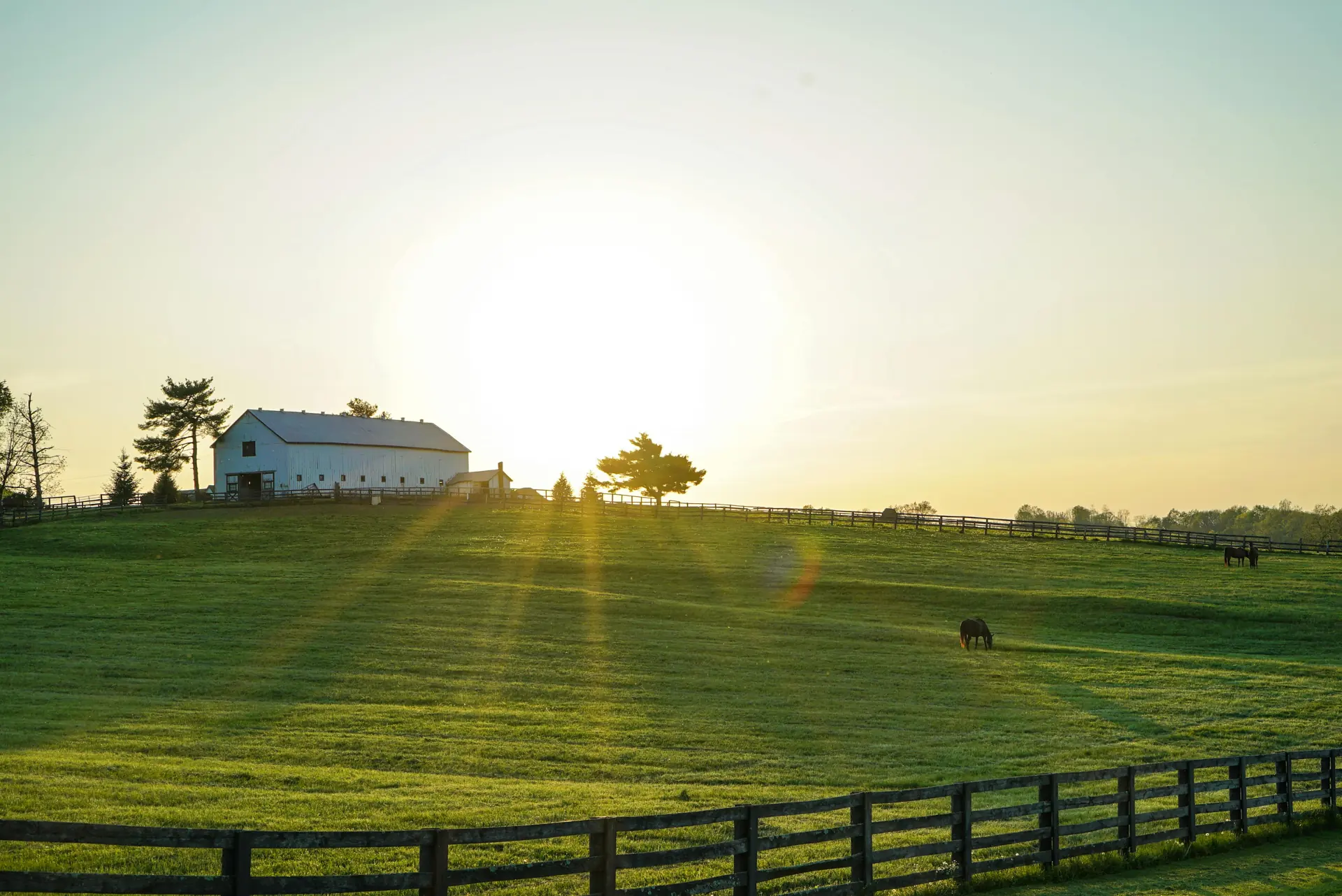
Georgetown · Williamson County
Sell land in Georgetown, Texas
Georgetown is the Williamson County seat, and land around it spans very different ground: San Gabriel River bottoms, rocky bluffs near Lake Georgetown, and open Blackland farmland east of I-35.
- No commissions, no fees, no repairs
- Written cash offer, no obligation
- You pick the closing date
Get your no-obligation cash offer
Takes about 60 seconds. No cost, no pressure.
- Cash or flexible termsNo bank approval, no financing contingency
- Title company closingLicensed Texas title handles it
- $0 fees or commissionsThe offer is what you receive
- Written, no-obligation offerDecline anytime, no cost
- Texas-based buyerTexas landowners and families
The land around Georgetown
West of I-35 toward Lake Georgetown the terrain turns hilly and wooded; east of the interstate it flattens into prairie and farm fields. The city has grown mostly outward along SH 29 and RM 2243.
How Georgetown got here
Georgetown is the county seat of Williamson County and sits where the North and South forks of the San Gabriel River meet. The town grew as a college and county-government town, with Southwestern University and a historic courthouse square at its center. For generations the surrounding land was farm and ranch country. In recent decades, rapid growth has pushed development outward, particularly along the I-35 corridor and toward the west and east.
The geography changes sharply from west to east. West of I-35, the land rises into limestone hills around Lake Georgetown and the river valley. East of the interstate, it flattens into prairie and farmland.
How land sells in the Georgetown area
Land buyers in the Georgetown area include builders, developers working along the highway corridors, and investors holding acreage for long-term growth. Lake and river proximity adds a premium to some tracts, while access, utilities and floodplain determine value on others.
Owners of older farm or ranch tracts often find that growth has made the land valuable, but that selling conventionally requires patience. Direct sales appeal to owners who want certainty.
Where Georgetown sits
Georgetown is in Williamson County, about 28 road miles from downtown Austin. The main routes are I-35, SH 29, SH 195, RM 2243. Landmarks: the San Gabriel River, Lake Georgetown, Inner Space Cavern, Southwestern University, Berry Springs Park and the historic downtown square.
| County | Williamson |
| Main roads | I-35, SH 29, SH 195, RM 2243 |
| Distance to downtown Austin | about 28 road miles |
| Land we see | Lake-area hill parcels, East-side farm tracts, Inherited family land |
Water, septic and utilities near Georgetown
The city operates its own water and electric utilities, which is somewhat unusual in Texas, so parcels inside the service area have a clear provider. Outside it, some tracts rely on wells and septic, and karst limestone in the west can make well drilling and foundations more complex.
Septic suitability varies from the rocky west side to the clay-heavy east side. Soil evaluations are commonly required.
What sellers near Georgetown run into
- Land near Lake Georgetown and the San Gabriel River can carry floodplain and Corps of Engineers restrictions.
- Karst features and caves in the limestone west of town can complicate foundations and drilling.
- Agricultural valuation can roll back if the land is sold and use changes.
Rules and records that matter in Georgetown
Land near Lake Georgetown and the San Gabriel River can involve floodplain and U.S. Army Corps of Engineers restrictions that affect what can be built. Cave and karst features in the limestone west of town can also complicate development.
If land has an agricultural valuation, a change of use after a sale can trigger rollback tax for up to three prior years plus interest. Williamson Central Appraisal District holds the valuation, and the Williamson County Clerk in Georgetown holds recorded deeds.
Common reasons owners sell land near Georgetown
Lake-area hill acreage
An owner has wooded, rocky acreage near the lake that has been in the family for decades. A direct buyer takes the site complexity and closes on the owner's schedule.
East-side farm land
A longtime farming family sells part of a tract as nearby development grows, and wants to avoid months on the market.
An estate with a mix of parcels
An estate includes several parcels in different parts of the county. One buyer handling all of them simplifies the closing.
What affects the value of land near Georgetown
- Utilities. Land with water and wastewater service, or close to it, draws builders and developers.
- I-35 and SH 130 access. Highway frontage draws commercial and industrial buyers.
- Aquifer status. Recharge-zone land faces impervious cover and water-quality limits.
- Floodplain. River and creek flood zones restrict building.
- Entitlements. Existing zoning, concept plans and plats add value.
- Topography. Limestone ridges and rolling terrain affect grading cost.
How do you sell inherited or estate land in Williamson County?
Williamson County probate matters run through its county court at law. The usual order looks like this.
Locate the will. A will generally must be probated within four years of death in Texas. Without one, heirs may use a determination of heirship.
Obtain legal authority. An executor needs letters testamentary. An administrator may be appointed if there is no will.
Collect the paperwork. Deed, tax statement, survey and death certificate.
Align the heirs. All owners must agree or a court must authorize the sale.
Close through a title company. Taxes and liens are paid at closing.
Many Georgetown families own land together as siblings or cousins. Some may want to sell, and others may want to keep it. A Texas attorney can explain partition rights and options. If everyone agrees, we can buy the whole tract and divide the proceeds according to ownership.
Not sure about aquifer or flood status? Send us the address or the Williamson Central Appraisal District account number. We check the owner of record, open taxes, flood maps and aquifer zone, and tell you what we found.
How does Georgetown compare with nearby markets?
Georgetown sits at the north end of the Austin metro, and its neighbors show different pictures. Round Rock to the south is more developed and technology-driven. Hutto to the southeast is flatter blackland with industrial growth. To the north, Belton and Temple show Bell County’s mix of healthcare, military and farmland.
Within Williamson County, rolling limestone in the west is a very different asset from flat farmland in the east. We look at your parcel against its immediate neighbors, not the county average.
Who should you call locally before you sell Georgetown land?
Georgetown is the Williamson County seat, so deeds, probate filings and many county offices sit close together. Start with these.
- Williamson Central Appraisal District. Look up the account, acreage and valuation. For hill country tracts, check the land-use classification the district applies.
- Williamson County Clerk. Deed records, easements and estate filings are here. Search for recorded cabin permits, septic records or old leases that may attach to your parcel.
- Williamson County Tax Assessor-Collector. Ask for a payoff statement if taxes are behind.
- City of Georgetown Planning Department. Ask what zoning and platting rules apply, and whether the land lies in the city or its extraterritorial jurisdiction.
- Georgetown Utility Systems and rural water suppliers. Ask who serves the land, how far the nearest line runs and what extension would cost.
- Texas Commission on Environmental Quality. If your land sits over the Edwards Aquifer recharge zone, this agency’s rules affect development plans. Ask for confirmation of your parcel’s status.
- U.S. Army Corps of Engineers, Fort Worth District. It manages Lake Georgetown and the land around it. Parcels near the lake may be affected by easements or federal land boundaries.
If your tract has a creek crossing, the county’s floodplain administrator can confirm whether FEMA maps apply.
How does the year run for Georgetown landowners?
A courthouse square, a university and a fast-growing suburb all shape the calendar.
January to March. Taxes are due January 31. Winter is the best time to see limestone ledges, creek beds and fence lines without dense foliage. Spring wildflowers start in March, which makes hill country land photograph well.
April to June. Appraisal notices arrive, with a protest deadline of May 15 or thirty days after the notice. The Red Poppy Festival and spring events fill the downtown square, which brings visitors and can complicate showings near the courthouse. Rain events can send water down creeks quickly.
July to September. Summer is hot, and cedar and oak stress shows in dry years. Southwestern University and local schools start in late August, which draws families and increases demand for homes and lots. A dry creek bed in September makes it easy to identify where water crosses a tract.
October to December. Fall is mild and a good season for tours. The Christmas stroll and holiday events fill the square in December. Tax bills arrive in October or November, and many sellers close before year-end.
Retirement demand. Georgetown draws many retirees, and some buyers come from other states. Their timelines often depend on the sale of a home elsewhere, so closings can shift. Ask a buyer about contingencies.
Aquifer and drought. Dry years put more attention on groundwater and water restrictions. Buyers ask about wells and water supply early in those years.

Land we look at in the Georgetown area
- Lake-area hill parcels
- East-side farm tracts
- Inherited family land
Nearby areas we buy in
Round Rock, Leander, Liberty Hill, Jarrell.
More ways to sell: sell land fast · sell land for cash · sell inherited land · how selling land in Texas works
Cash is simple. Some land needs more than that.
We buy for cash when that works. When a deal needs it, we get creative: owner-financed purchases, notes, partnerships and development.
Cash offer
A written offer within 24 hours. Closing typically takes 7 to 30 days, or on the date you choose. No commissions or fees.
Owner financing and notes
Want a down payment and payments over time? We can buy your land on owner-financed terms, and we can talk about buying an owner-financed note you hold.
Partnerships and entitlement
Land with development potential? We partner with landowners, buy entitled land and take properties through entitlement.
There is no one-size-fits-all land deal. Each one can have its own lenders, financials and offers, so contact us for details.
Tell us how you want to be paid How owner financing works → Investor? Register for deals →
Common questions
What is the agricultural-valuation rollback?
If land has an ag exemption and its use changes, taxing units can bill back taxes for prior years. We account for it so you are not surprised at closing.
How far is Georgetown from Austin, and does that affect my land's value?
Georgetown is about 28 road miles from downtown Austin, reached mainly by I-35, SH 29, SH 195, RM 2243. Buyers weigh that commute and the nearest utilities when they price a tract, and we do the same.
Does being near Lake Georgetown affect value?
It can. Lake access can add value, but Corps of Engineers boundaries and floodplain can limit use. We look at the specifics of your parcel.
Do karst features or caves make land unsellable?
No, but they affect what can be built and add survey cost. We price that in.
What do you check first on a Georgetown-area parcel?
We start with Williamson County appraisal and deed records, then land near Lake Georgetown and the San Gabriel River can carry floodplain and Corps of Engineers restrictions.
How much is my Georgetown land worth?
Utilities, highway access, aquifer status, floodplain, entitlements and size drive value. Send the address or tax account number and we give you a written offer within 24 hours with the reasoning behind it.
Do you buy land over the Edwards Aquifer?
Yes. We price the extra rules honestly and tell you what we assumed.
Should I sell to a developer instead?
Sometimes. A developer may pay more for a large tract, but contracts can be long and conditional. We tell you honestly if we think that route suits you better.
Can I sell land with an old cabin that has no permits?
Yes. We buy land as is, and we price the cabin as it stands. Sometimes a structure is worth little, or it can be a liability. We tell you what we assumed.
Does my land need a septic study before I sell?
Not for a direct sale. A buyer who plans to build will do their own study. We price in the uncertainty.
What if part of my land is in a creek corridor?
It reduces usable area. We review the flood map and price the usable acres honestly.
Ready to see what your property is worth to us?
Tell us about it in 60 seconds. You will get a straight answer, with no obligation and no pressure.