
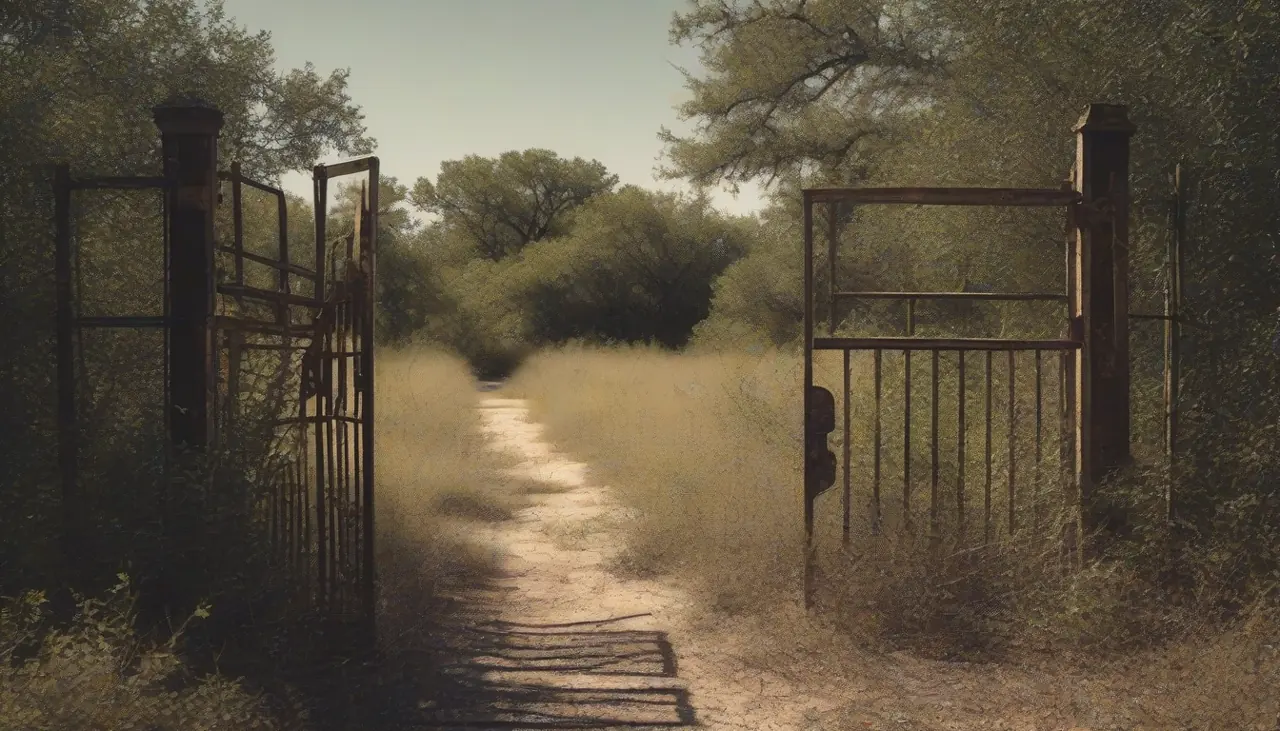
No road access
Sell landlocked land in Texas
Land with no recorded road access is hard to finance and hard to list. A cash buyer can purchase it as-is, and in many cases access can be solved.
- No commissions, no fees, no repairs
- Written cash offer, no obligation
- You pick the closing date
Get your no-obligation cash offer
Takes about 60 seconds. No cost, no pressure.
- Cash or flexible termsNo bank approval, no financing contingency
- Title company closingLicensed Texas title handles it
- $0 fees or commissionsThe offer is what you receive
- Written, no-obligation offerDecline anytime, no cost
- Texas-based buyerTexas landowners and families
How land becomes landlocked
- A larger tract was divided and the back portion lost its frontage
- A neighbor closed a gate or road that was used informally for years
- A public road was abandoned or never actually built
- Inherited tracts passed to different heirs, cutting off one
- A deed described access that was never recorded
Ways access can be solved
| Option | How it works | Effort |
|---|---|---|
| Recorded easement from a neighbor | Negotiate and pay for a written, recorded easement | Low to moderate |
| Easement by necessity | Implied when a tract was split off with no access; may need a court order | Moderate to high |
| Prescriptive easement | Rights from long, open, continuous use; must be proven | High |
| Buy a strip | Purchase a narrow parcel connecting to the road | Moderate |
| Sell as-is for cash | No access work needed | Lowest |
What buyers pay for landlocked land
Value depends on how solvable the access problem is. A tract bordering one friendly neighbor with a clear route is priced very differently from a parcel surrounded by many owners. We review your deed, the surrounding parcels and county road maps and explain how we priced it.
If your land has other problems
Landlocked land often has other issues too: back taxes, multiple heirs or old fence disputes. We buy these as-is. See also our guide to selling acreage.
What is the Three Doors Rule?
Here is the rule of thumb for this article.
Landlocked land needs one of three doors, and you cannot sell comfortably until you know which one you have.
Call it the Three Doors Rule.
Door 1. Frontage
The tract touches a public road, and a survey confirms it. This is the cleanest door. If you have it, your land is not landlocked.
Door 2. A recorded easement
A written easement, recorded in the county records, gives you the right to cross a neighbor's land. This is the next best door. It should describe the route and say who may use it.
Door 3. A neighbor's signature
You have neither of the first two, but a neighbor is willing to grant a written, recorded easement. This door does not exist yet, which makes it the one you can still build.
If you have no door at all, and no neighbor will sign, you are down to legal remedies and sales to buyers who accept the problem. Both are covered below.
What is the one-glance cheat sheet for landlocked land?
Use this table to place your parcel before you spend money.
| What you find | What it means | What to do first |
|---|---|---|
| Survey shows road frontage | You have Door 1 | Confirm the road is public and maintained by the county or state |
| Deed or title commitment mentions an easement | You may have Door 2 | Get the recorded document and check that the route and use are clear |
| Only a worn path across a neighbor’s land | You have a habit, not a right | Ask the neighbor about a written easement |
| Land was once part of a larger tract that was split | An implied easement may be possible | Ask a Texas attorney about an easement by necessity |
| No road, no easement, no friendly neighbor | You have no door yet | Ask an attorney, then price the sale honestly |
| Title commitment excepts access or notes no access | The title company sees the same problem | Ask what would clear it |
None of these results is a verdict. It is a map for the next phone call.
What is an easement by necessity?
An easement by necessity is a legal concept in which a court may recognize a right to cross a neighbor’s land when a parcel has been cut off from any road. In general terms, the idea is that when one owner splits a tract and leaves a piece with no way out, the law may imply a right to reach the road across the land that was once part of the same tract.
In general terms, these claims depend on facts such as whether the two parcels once had the same owner, whether access was needed when they were split and whether another reasonable route exists. Courts decide these on the facts. Not every landlocked tract qualifies, and a court case is slow and costly.
A few honest points follow from that.
- It is not automatic. Land does not become accessible because it would be convenient.
- It is a legal claim. You may need an attorney, and possibly a court, to establish it.
- The route matters. Courts and neighbors often look for the least burdensome route, which may not be the one you would pick.
- Other doctrines exist. Long and open use of a route can sometimes support a claim. Ask a Texas attorney whether any apply to your history.
The practical lesson is that a lawsuit should be the last tool, not the first. Most sellers get further with a conversation and a pen.
How do you negotiate an access easement with a neighbor?
The least dramatic fix is a written, recorded access easement that the neighbor signs. It is also the only option that makes your land easier to sell in a straightforward way. Here is how sellers usually approach it.
- Learn who owns the land between you and the road. The county appraisal district and the county clerk’s records are the places to start. There may be more than one owner.
- Get a survey of the tract and the proposed route. A surveyor can draw the route, show its width and tie it to the road.
- Talk before you write. Visit or call. A neighbor who hears about the plan from you is more likely to cooperate than one who receives a letter from a lawyer.
- Offer something. That may be a one-time payment, shared maintenance of the route, a fence or gate at your cost, or a limit on the type of use.
- Have an attorney draft the easement. It should describe the route, the width, who may use it, who maintains it and whether it binds future owners.
- Record it. An easement that is not recorded in the county records may not help the next owner.
Suppose you own 12 acres behind a neighbor’s 80-acre pasture. The neighbor has let your family cross for years without a word, and has never signed anything. Before you list the land, you ask for a recorded easement along the existing farm road, with a stated width, a gate and a promise to share repair costs if your use grows. The neighbor agrees, partly because you asked politely and partly because the easement spells out limits. Your land now has Door 2. The easement is a document the next buyer can read, and a buyer cannot read a handshake.
Now suppose the neighbor says no. That is a legitimate answer and it tells you something important. You can ask an attorney whether other routes or claims exist, or you can price the land honestly as landlocked.
What do the survey and title company say about access?
Two documents tell you most of what you need.
The survey. A licensed surveyor can show whether the tract touches a public road, where any road or easement lies and where the boundaries sit. A survey that shows no frontage is bad news you can use. It tells you what to fix. It also protects you from selling a buyer a parcel the buyer cannot reach.
The title commitment. A title company reviews the county records and reports what it finds, including recorded easements and exceptions. If the commitment shows no recorded access, ask the title company what would be needed to resolve it. Ask also whether any title coverage addresses access, since policy terms vary and depend on the facts and the buyer.
Do both early. A title commitment costs little and a survey costs more, but either one costs less than closing a sale and finding out the buyer’s lender will not close.
What should you try before you sell?
A short list, in order of effort:
- Order the records. Get your deed, the recorded plat if any and a copy of the title commitment.
- Look at the survey. If you do not have one, ask what it would cost.
- Ask the neighbors. Start with the one between you and the road. The best deal is usually a signed easement.
- Talk to a Texas attorney. Ask about an easement by necessity or other rights, and what the cost and timeline of each would be.
- Offer the land to adjoining owners. They may pay more than a stranger.
- Then price it honestly. If none of this works, sell it as landlocked and say so up front.
Skipping straight to a listing means the first serious buyer discovers the problem for you, and the price change that follows feels worse than an upfront discount.
When should you not sell to a cash buyer?
Cash buyers are not the right answer for every landlocked parcel. Think twice if:
- The neighbor is likely to sign. If a recorded easement is within reach, you may recover more value by getting it before you sell.
- You have a strong easement by necessity claim. If an attorney tells you the claim is solid and the cost is reasonable, curing the problem could be worth it.
- An adjoining owner wants the land. A neighbor who needs your tract may pay more than a buyer who prices in the risk.
- You are not in a hurry. Time is the one thing a cash buyer saves you, and if you do not need it, you can afford a longer path.
- The offer does not come in writing. Any buyer should explain the price and the terms in writing.
A cash sale makes the most sense when the fix is slow, uncertain or expensive, or when you need an answer by a certain date. It is a tool, and sometimes the tool is the wrong size.
What mistakes should you avoid?
- Assuming a path is a right. A path you have used for years is not the same as a recorded easement.
- Listing without disclosing. A buyer who learns about the access problem late will either walk away or reduce the price, and may be angry in the bargain.
- Fixing it with a handshake. An oral promise from a neighbor disappears when the neighbor sells, dies or changes their mind.
- Drawing the route yourself. A surveyor and an attorney should describe it.
- Paying for a cure before checking value. Make sure the cost of fixing access is smaller than the value it adds.
- Trusting a stranger who offers to solve the access for a fee. Check the red flags in Texas land scams that target sellers.
We are a property buyer, not a law firm. This is general information, not legal advice.
Cash is simple. Some land needs more than that.
We buy for cash when that works. When a deal needs it, we get creative: owner-financed purchases, notes, partnerships and development.
Cash offer
A written offer within 24 hours. Closing typically takes 7 to 30 days, or on the date you choose. No commissions or fees.
Owner financing and notes
Want a down payment and payments over time? We can buy your land on owner-financed terms, and we can talk about buying an owner-financed note you hold.
Partnerships and entitlement
Land with development potential? We partner with landowners, buy entitled land and take properties through entitlement.
There is no one-size-fits-all land deal. Each one can have its own lenders, financials and offers, so contact us for details.
Tell us how you want to be paid How owner financing works → Investor? Register for deals →
Common questions
Can I sell land with no road access in Texas?
Yes, though access strongly affects price. Cash buyers can purchase landlocked land, and sometimes the access problem can be solved with an easement before or after the sale.
What is an easement by necessity?
In Texas, when a parcel was once part of a larger tract and becomes landlocked by a division, the law can imply a right to cross the other part of the original tract. It generally requires proof and may need a court order, so talk to an attorney.
Can I buy access from a neighbor?
Often. A recorded access easement from an adjoining owner, in exchange for payment, can transform a parcel's value. We can help explore this.
Is a handshake agreement or years of use enough?
Usually not. Unrecorded permission can end when the neighbor sells or dies. A prescriptive easement can arise from long open use, but proving it takes work.
Why do banks refuse landlocked land?
Lenders require legal, recorded access as collateral, so financed buyers cannot close. That is why landlocked tracts sit on the market, and why cash buyers matter.
How do you price land with no legal access?
We start from similar tracts with access, then discount for the cost, time and risk of obtaining it. If a neighbor easement is likely, the discount is smaller.
Ready to see what your property is worth to us?
Tell us about it in 60 seconds. You will get a straight answer, with no obligation and no pressure.