

Austin is the fastest-changing land market in the state. The city passed one million residents in the 2025 Census estimates, and the growth has pushed far beyond the city limits into eastern Travis, Hays, Bastrop, Caldwell and Williamson counties. A lot that sat unnoticed for thirty years can suddenly be next to a new road, a new employer or a new subdivision, and owners often discover that a parcel they inherited or bought as an investment is both more valuable and more complicated than they expected.
This guide explains how land actually sells in and around Austin, what drives value, which rules matter, what sellers run into, and how a direct cash sale compares with listing. It is written for landowners, heirs and executors who want clear answers before they decide anything. If you would rather talk it through, you can book a call, schedule a visit, or get a free quote at any point on this page.
Austin land at a glance
Why Austin landowners choose a direct cash sale
Entitlement risk is real
Austin buyers price in zoning, impervious cover, tree and watershed rules and utilities. A direct buyer who has already done that math can make an offer without waiting for a builder to run studies on your parcel.
Old lots carry old baggage
Back taxes, mowing and code liens, unclear heirs and unrecorded easements are common on long-held Austin parcels. We take them as-is and pay liens from your proceeds at closing.
Speed matters when the market moves
Interest rates, road projects and employer announcements move land values. A direct sale lets you set the date instead of waiting for the right retail buyer to appear.
How land sells in Austin
Land that trades in Austin falls into three groups. First are small infill lots in older neighborhoods, especially in east and south Austin, where builders buy one or two lots at a time for new homes. Second are larger tracts on the fringe: acreage in the city's extraterritorial jurisdiction and just beyond it in Travis, Hays and Williamson counties, bought by builders, developers and investors positioning for growth. Third are the awkward parcels: creek-bottom land, steep hillsides, pieces with no direct road frontage, and inherited tracts whose title is unclear.
Buyers evaluate each of these differently. An entitled infill lot is priced almost like a finished product, based on what a home will sell for minus construction cost. Fringe acreage is priced on how soon utilities and roads arrive and whether the tract can be platted. The awkward parcels are priced by whoever is willing to solve the problem, and that is often a direct buyer rather than a retail purchaser using a mortgage.
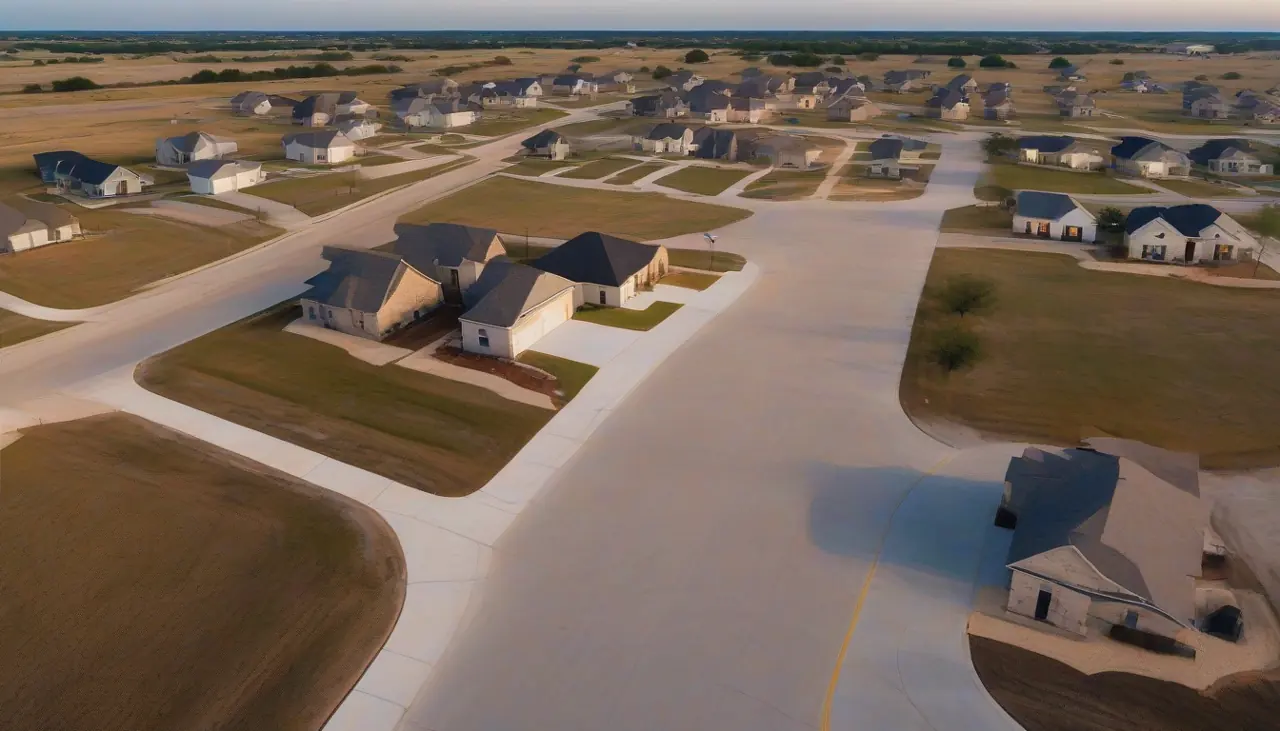
The pace of the market has also changed. Years of strong growth brought many buyers, but higher borrowing costs and construction expenses made builders more selective about what they will buy and what they will pay. Land with clean title, utilities nearby and few unknowns still moves. Land that needs a lot of work can sit on the market for months, accumulating taxes and carrying costs.
If you are deciding between listing and a direct sale, the honest comparison is net proceeds and certainty rather than the headline price. A listing may reach more buyers and sometimes a higher number, but you pay commission, wait through showings and contingencies, and carry taxes and insurance meanwhile. A direct sale is usually a lower number with no commission, no repairs and a firm closing date.
Land types in Austin and what drives their value
| Land type | What drives value | Who typically buys | Watch for |
|---|---|---|---|
| Infill residential lot | Zoning, utilities at the street, tree and setback limits, neighborhood sales | Small builders, investors | Liens, unpaid taxes, heritage trees, alley or access issues |
| Acreage inside the ETJ | Platting potential, road frontage, nearby utilities, floodplain | Developers, builders | City subdivision rules, easements, drainage |
| Creek and floodplain land | Buildable area outside the floodplain, FEMA maps, past flooding | Investors, specialty developers | Floodway limits, insurance, buyout areas |
| Hill Country edge tracts | Slope, rock, views, well or septic feasibility, aquifer rules | Custom builders, lifestyle buyers | Impervious cover limits, habitat, access |
| Inherited or unprobated parcels | Clear title, probate path, tax history, heirs' agreement | Direct buyers, investors | Multiple owners, estate authority, back taxes |
Ready to talk about your Austin land?
Pick whichever is easiest. No cost, no obligation, no pressure.
Prefer to talk now? Call (512) 588-2771
Land areas around Austin
East Austin and the SH 130 side
East of I-35 the land flattens into Blackland Prairie. Older neighborhoods hold infill lots, while the outer east side near Manor, Del Valle and the SH 130 corridor has larger farm and industrial-edge tracts. Employers, logistics and nearby airport and racetrack activity keep investor attention on this side of town.
Southeast Austin and Del Valle
Around the airport and the Colorado River the land is a mix of old farm tracts, river terraces and small rural lots. Floodplain along the river and Onion Creek limits usable acreage on some parcels, and many family tracts have informal boundaries.
South and southwest Austin
Rolling limestone terrain along Slaughter, Onion and Bear creeks. Edwards Aquifer-related rules and creek setbacks can limit how much of a tract can be built, and older acreage lots often have aging septic systems.
West of MoPac and the Hill Country edge
Steeper, rockier ground with live oak and juniper, scenic views and some of the strictest environmental rules in the city. Custom-home builders and lifestyle buyers pay for views but also price in engineering and slope.
North Austin and the Williamson County line
Land near Pflugerville, Round Rock and Cedar Park is a mix of commercial-edge parcels, leftover acreage and creek-side tracts. Parcels near the county line may have records in both Travis and Williamson counties.
Rules and records every Austin seller should know
Austin has one of the most developed sets of land-use rules in Texas. Parts of the city fall within watershed protection zones, including the Barton Springs Zone, where limits on impervious cover can sharply reduce how much of a lot can be built. The city also protects large trees under its heritage tree rules, which can change where a house, driveway or utility line can go. Both matter to buyers, which is why they affect what we can pay.
Outside the city limits but inside its extraterritorial jurisdiction (ETJ), Austin can still regulate subdivision of land. A city's ETJ can extend up to five miles for the largest cities, so a tract that feels rural may still be subject to city platting standards. State law since 2017 has also tightened the rules on annexation in larger counties, so owners in the ETJ generally have more say than they used to, but it is worth confirming with the city or an attorney before you assume anything.
Ownership and valuation records are held by the Travis Central Appraisal District, and recorded deeds, easements and liens are held by the Travis County Clerk. Many Austin properties also carry an agricultural or wildlife valuation, which lowers the tax bill; if the use changes after a sale, rollback tax can apply for up to three prior years plus interest. We check all of this before we make an offer and tell you exactly how it affects your net.
Water, septic and utilities near Austin
Inside the city, water, wastewater and electric service come from the city's utilities, and the question for a vacant lot is how far the nearest line is and what it costs to connect. Older neighborhoods can have undersized or aging lines, and a lot with unpaid tap or impact fees carries a hookup cost that buyers subtract from their offers.
On the fringes, many parcels sit outside city sewer service and rely on septic, which depends on soil depth and slope. Septic suitability varies enormously across Travis County, from forgiving prairie clay to thin rocky soil in the hills, so a soil evaluation is often the deciding factor for acreage. Wells are common in the west and south, where groundwater districts and aquifer rules may apply.
What is driving land demand around Austin
The Austin region keeps adding people and jobs. The Texas Triangle that includes Austin, San Antonio, Houston and Dallas-Fort Worth holds the majority of the state's population and an estimated 80 percent of its economic output, and Austin plus San Antonio together added roughly 92,000 residents in the most recent Census year. That growth is spreading along I-35 and the SH 130 corridor, where logistics parks, industrial projects and new subdivisions are converting farmland.
Large public and private projects are reshaping access and demand. TxDOT's I-35 Capital Express Central project is rebuilding the interstate through Austin through roughly 2033, SH 130 has drawn warehouse and industrial development in Caldwell and Hays counties, and Samsung's large semiconductor campus in nearby Taylor has increased investor interest east and north of the city. Data-center developers are also seeking land with access to power in Central Texas, which can raise the value of the right tract.
None of this guarantees a higher price for any particular parcel. Value still depends on access, utilities, floodplain and title, and big projects can also change road plans and drainage around nearby properties. That is why we look at each tract individually and explain exactly how we arrived at our number.
See the bigger picture in our guides to the I-35 corridor and the Texas Triangle.
Common reasons Austin owners sell land
An inherited lot in an older neighborhood
Siblings in different cities inherit a small vacant lot with unpaid taxes and a mowing lien. None of them wants to manage it. A direct sale pays the liens from proceeds and divides what remains through the title company.
Edge-of-city acreage with a creek
A longtime owner has several acres near the city's edge, part of them in the floodplain. A conventional buyer wants surveys and entitlement first. A cash buyer prices the usable acreage and takes the survey risk, so the owner closes without waiting on a developer.
A tract that no longer fits the owner's plans
An investor bought land years ago and now needs the capital for something else. They would rather close on a set date than carry taxes while waiting for the right builder.
An estate that needs to be settled
An executor needs to convert real estate to cash for distribution. We coordinate with the estate's attorney and the title company and can close once the court paperwork is ready.
What affects the value of Austin land
Road frontage and access
Paved county road or state highway frontage with a legal, recorded access point is worth far more than a landlocked parcel that depends on an easement.
Utilities
Proximity to a water line, a wastewater line, electric service and fiber changes what a developer will pay. Land in a Municipal Utility District or a water supplier's certificated service area is easier to build on.
Floodplain and drainage
FEMA flood maps matter. A creek bottom that floods is hard to build on. High ground next to it can be very valuable.
Zoning and jurisdiction
City zoning, county rules and any existing plat shape what a buyer can do. Land already platted or entitled sells at a premium.
Shape and topography
A usable, roughly rectangular tract beats a narrow strip or a steep hillside with the same acreage.
Minerals and easements
Pipelines, power lines and severed mineral rights affect value. We check each one.
How do you sell inherited or estate land in Travis County?
Selling land after a death is one of the most common reasons we hear from Austin-area sellers. The legal side is manageable if you take it in order.
Confirm who owns the land. If there is a will, it usually must be admitted to probate. Texas generally allows four years after death to probate a will. If there is no will, heirs may need a court determination of heirship.
Get legal authority to sell. An executor with letters testamentary, an administrator, or heirs holding title can sign a deed. A Texas probate attorney can tell you which applies.
Gather the paperwork. Deed, recent tax statement, any survey and the death certificate help the title company move quickly.
Agree on a price and a date. All owners must consent to sell, or a court must authorize it.
Close with a Texas title company. The title company clears the deed, pays off liens and distributes the proceeds.
Heirs property is a special problem. When several relatives inherit land without a will, each owns an undivided share. The Texas Uniform Partition of Heirs' Property Act gives co-owners rights in a forced sale or partition, and it matters if some owners want to sell while others do not. Talk with a Texas attorney if your family is split. If everyone agrees, we can buy the whole tract in a single transaction and the proceeds are divided according to each heir's share.
Not sure where you stand? Send us the address or the tax account number. We can look up the owner of record, see what liens appear and tell you what the title company will likely need before you spend a dollar on legal fees.
Why do landowners choose us over a typical land flipper?
Land buyers are not all alike. Some make low offers and hope you do not shop around. Others disappear when title problems appear. Here is how we try to be different, and what you should expect from any buyer you trust.
We explain the number. You get the comparable sales, the access and utility factors and the discounts we applied. If you disagree, we talk it through.
We put the offer in writing. A phone number is not an offer. You receive a document you can show to your attorney, your CPA or your family.
We use a Texas title company. Funds move through a neutral third party, and you receive a closing statement that shows every dollar.
We tell you when to wait. If a rezoning, a road project or a pending sale next door could raise your land value, we say so.
Our pledge is simple. If we cannot offer a fair price, we will tell you, and we will point you toward a better route, even if that route is a broker or an auction.
Who should you call locally before you sell Austin land?
A few phone calls before you accept any offer can save weeks. Each office below answers a different question, and none of them charges for basic information.
- Travis Central Appraisal District. Ask for your account’s current appraised value, whether an open-space valuation is on file and which exemptions apply. The district also shows the legal description and acreage it has on record, which you can compare with your deed.
- Travis County Clerk. The clerk holds the deed records and the probate filings. If land passed through an estate, search here for letters testamentary, a muniment of title or an affidavit of heirship.
- Travis County Tax Office. Ask for a payoff statement if taxes are behind. A figure with penalties and interest through a specific closing date is what the title company will use.
- Travis County Transportation and Natural Resources. For land outside the city, this department handles floodplain questions, driveway permits and development rules in the unincorporated county.
- City of Austin Development Services. If any part of the land sits inside the city or its extraterritorial jurisdiction, ask which watershed rules, impervious cover limits and platting requirements apply.
- Barton Springs/Edwards Aquifer Conservation District. Land in parts of southwest Travis County falls under this groundwater district, which regulates wells and can affect what a buyer plans to build.
Keep a short log of who you spoke with and what they said. A buyer can then see what has been checked and what has not.
How does the year run for Austin landowners?
Austin land has a rhythm that shows up in buyer behavior and in what you can see on the ground.
January to March. Property tax bills are due by January 31, so late-January payoff letters are common. Bluebonnets and spring grasses start to show in March, and tracts look their best from mid-March through April. Photographs taken then give buyers a better first impression.
April to June. Appraisal notices arrive around April or May, and the protest deadline is usually May 15 or thirty days after the notice date. If your value jumped, a protest filed on time can lower the tax bill while a sale is pending. Builders also start spring projects, so tract inquiries tend to rise.
July to September. Summer heat and dry conditions make brush fire risk a real concern on Hill Country and eastern Travis parcels. Dry creek beds are easy to see in this season, which helps a surveyor and a buyer map drainage. University move-in in late August tightens the market for small lots near campus.
October to December. Tax statements arrive. Many owners decide to sell before the next January deadline to avoid another year of billing. Year-end closings are common because sellers like to settle gains and losses within a single tax year, so talk to a CPA early if that matters to you.
Odd-numbered years. The Texas Legislature meets from January to late spring in odd years. Changes to property tax law, annexation and groundwater rules sometimes follow. A buyer may wait for the session to end before committing to a large purchase, and a seller who understands that can set expectations.
How selling land to us works
Tell us about it
Share the location and a few details by form or phone. About a minute, no cost.
We research and make an offer
We check records, access, flood and utilities, then give you a written cash offer within 24 hours and explain the number.
You choose the date and get paid
A Texas title company handles the paperwork. You are paid at closing, usually 7 to 30 days out or on the date you choose.
Benefits of working with Sell My Texas Estate in Austin
No commissions or fees
You keep the full offer. We typically cover standard closing costs.
Buy as-is
No repairs, clearing, surveys or cleanup required to get an offer.
You pick the date
Close in 7 to 30 days, or on the date you choose.
We handle hard land
Back taxes, liens, no road access, heirs, minerals, floodplain.
Cash or flexible terms
Cash when it works, owner-financed or creative terms when the deal needs them.
Straight answers
If a listing would net you more, we will say so.
Local to Texas
We know Travis County records, Austin's watershed and tree rules, and how builders here actually price an entitled lot versus raw acreage.
Cash offer vs listing your Austin land
| Sell to us | List with an agent | Auction | |
|---|---|---|---|
| Commission and fees | None | Commonly 5 to 6%+ | Buyer's premium and fees |
| Time to close | 7 to 30 days, or your date | Often months on land | Weeks, on their schedule |
| Price certainty | Written offer up front | Depends on market | Unknown until bidding |
| How you get paid | Cash at closing, or owner-financed terms | Whatever the buyer can finance | Cash at the auction |
| Financing risk | None, cash | Buyer loan can fail | Usually cash |
| Repairs and cleanup | None | Often expected | As-is |
Details in our guides to selling land for cash, selling land fast and selling without a realtor.
Cash is simple. Some land needs more than that.
We buy for cash when that works. When a deal needs it, we get creative: owner-financed purchases, notes, partnerships and development.
Cash offer
A written offer within 24 hours. Closing typically takes 7 to 30 days, or on the date you choose. No commissions or fees.
Owner financing and notes
Want a down payment and payments over time? We can buy your land on owner-financed terms, and we can talk about buying an owner-financed note you hold.
Partnerships and entitlement
Land with development potential? We partner with landowners, buy entitled land and take properties through entitlement.
There is no one-size-fits-all land deal. Each one can have its own lenders, financials and offers, so contact us for details.
Tell us how you want to be paid How owner financing works → Investor? Register for deals →
Austin land selling: frequently asked questions
Can I sell land in Austin without a realtor?
Yes. Texas does not require an agent to sell your own land. You can sell directly to a cash buyer like us, with a Texas title company handling the contract, title work and closing. You avoid commission and marketing, and you choose the closing date.
How fast can I sell land in Austin for cash?
A straightforward sale can close in 7 to 30 days. Most of that time is the title company ordering a commitment and confirming who can sign. If you need more time, we can set a later date.
How do you decide what to offer for Austin land?
We start from recent comparable land sales, then adjust for access, utilities, zoning or ETJ status, floodplain, tree and watershed limits, minerals, taxes and the cost of carrying and reselling the land. We explain the math in writing so you can compare it to a listing.
Do Austin's tree and watershed rules lower my price?
They can, because they limit what a buyer can build. If your lot is in a watershed zone or has protected trees, we reflect that in the offer and tell you how.
Can you buy a lot with unpaid taxes or city liens?
Yes. Back taxes, mowing, code and other recorded liens can generally be paid from the sale proceeds at closing. The title company gets payoff figures and settles them before you receive the balance.
What if my Austin land is in the floodplain?
We can still buy it. We review FEMA maps and the survey, price the buildable area outside the floodplain, and explain how the floodplain affected the number.
Can I sell inherited land in Austin before probate is finished?
Generally the person signing needs legal authority, such as an executor with letters or a clear title path through the court. We can sign a contract contingent on that authority and close when the paperwork is ready. Talk to a Texas probate attorney about your specific situation.
Do I owe rollback tax if my land has an agricultural valuation?
If the land has an agricultural or wildlife valuation and the use changes after the sale, taxing units can bill additional tax for up to three prior years plus interest. The contract states who pays it, and we explain it before you sign.
Will I get paid in cash or by wire?
Payment is made through the title company by wire or cashier's check when the deed is recorded. Never wire money based on emailed instructions without calling the title company yourself using a number you looked up.
Do you buy land outside Austin city limits?
Yes. We buy across Travis County and the neighboring counties, including Hays, Williamson, Bastrop and Caldwell, along the I-35 and SH 130 corridors and throughout the Texas Triangle.
Is there any cost to get an offer?
No. Getting an offer is free and carries no obligation. You can request a quote, book a call or schedule a visit, and you can decline at any time.
Is a cash offer lower than a listing price?
Usually yes, because you are trading some price for speed, certainty and zero commission, repair or carrying costs. We show you the comparison so you can decide with real numbers.
How much is my Austin land worth?
It depends on location, access, utilities, floodplain, zoning and size. Send us the address or tax account number and we will give you a written offer within 24 hours, along with the reasoning behind it. For a formal valuation you may also want a licensed appraiser.
Do you charge commissions or fees?
No. We buy the land ourselves. You do not pay commissions, listing fees or closing costs to us. The title company's normal charges are discussed up front, and we explain who pays what before you agree.
Can you buy land with back taxes or liens?
Yes. We can pay delinquent taxes and clear liens from the proceeds at closing, as long as the sale price covers them. If it does not, we tell you early and talk through options.
Can you buy inherited land if the heirs live out of state?
Yes. Many of our sellers live outside Texas. Documents can be signed by mail or remote notary, and the title company handles the details. We work with you across time zones.
Nearby cities and counties we buy in
Round Rock, Killeen, San Antonio, Travis County, Hays County, Williamson County, Georgetown, Kyle, Buda, Dripping Springs. Also see Travis County and all 254 Texas counties.
We are a direct property buyer, not a law firm, tax advisor or real estate brokerage. This guide is general information, not legal or tax advice. Population figures: U.S. Census Bureau Vintage 2025 estimates. Market figures are indicative and change.