
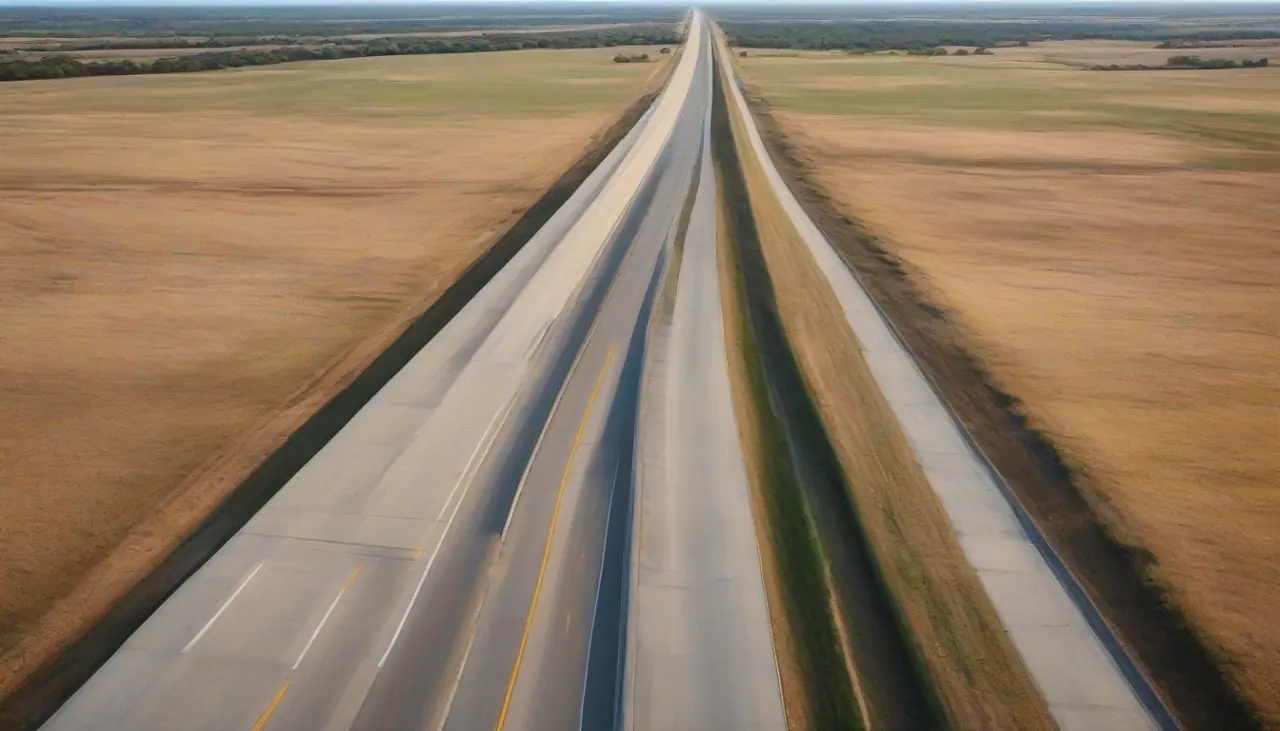
Interstate 35 is the spine of the Texas Triangle. It connects Dallas-Fort Worth, Waco, Temple and Killeen, Austin, San Antonio and, at its southern end, Laredo, the busiest inland port on the U.S.-Mexico border. TxDOT's broad corridor definition covers 120 counties holding about 87 percent of the state's population, and its narrower I-35 Texas Corridor Study area counted about 14.9 million people (roughly 49 percent of Texans) in 2023. Different definitions give different numbers, but all point to the same fact: most Texans and most of the state's growth sit on or near this road. TxDOT corridor planning
This guide walks the corridor from north to south, explains what is driving land demand in each segment, and shows what that means if you own a tract and are thinking about selling. At any point you can get a free quote, book a call or schedule a visit.
Why land along I-35 behaves differently
Everything needs land
Housing, warehouses, data centers, semiconductor plants, highways and utilities all compete for acreage near the interstate and the routes feeding it.
Outer counties lead growth
The 2025 Census estimates show the fastest percentage growth in outer suburban counties such as Kaufman, Waller, Liberty and Caldwell, not the urban cores.
Value follows access
A tract with frontage, utilities and a short path to an interchange can be worth many times a similar tract five miles away.
The corridor, segment by segment
| Segment | Counties | What is driving demand | Land we see |
|---|---|---|---|
| DFW and north (I-35E / I-35W) | Denton, Tarrant, Dallas, Ellis, Hill | Suburban housing, logistics, data centers, ongoing I-35E widening in Denton and Ellis | Farm tracts on the growth edge, infill lots, powered-land parcels |
| Waco, Temple, Killeen | McLennan, Bell, Coryell | Mid-sized metros, medical and manufacturing employers, lower land costs than DFW or Austin | Blackland farmland, city-edge acreage, lake-area land |
| Georgetown to Austin | Williamson, Travis | Austin spillover, Samsung's Taylor campus, SH 130 logistics | Hill Country-edge ranch splits, east-side farm tracts, infill lots |
| Austin to San Antonio | Hays, Comal, Guadalupe, Caldwell | Fastest county growth in the region, builders running out of land, SH 130 and I-10 | Ranchettes, creek tracts, farm land turning to subdivisions |
| San Antonio to Laredo | Bexar, Atascosa, Frio, La Salle, Webb | Trade and logistics through Laredo, Eagle Ford oil and gas, brush-country ranches | Large brush ranches, industrial-zoned tracts, mineral-split land |
North: Dallas-Fort Worth and the I-35E / I-35W split
North of Waco the interstate splits into I-35E through Dallas and I-35W through Fort Worth and Denton. North Texas is on track to reach roughly nine million residents and the regional planning agency projects about 12.4 million by 2050. Celina, Princeton, Anna and Melissa have been among the fastest-growing cities in the country, and Collin County added nearly 43,000 people in the latest Census year. KERA
South of Dallas, Ellis County has seen utility companies and developers buy farmland ahead of growth, and TxDOT is widening I-35E from the Denton County line toward I-635. To the south, Hill County has attracted data-center developers, with one reported offer implying around $100,000 per acre, though the county also showed how quickly local politics can intervene when it briefly imposed and then lifted a moratorium. KWTX
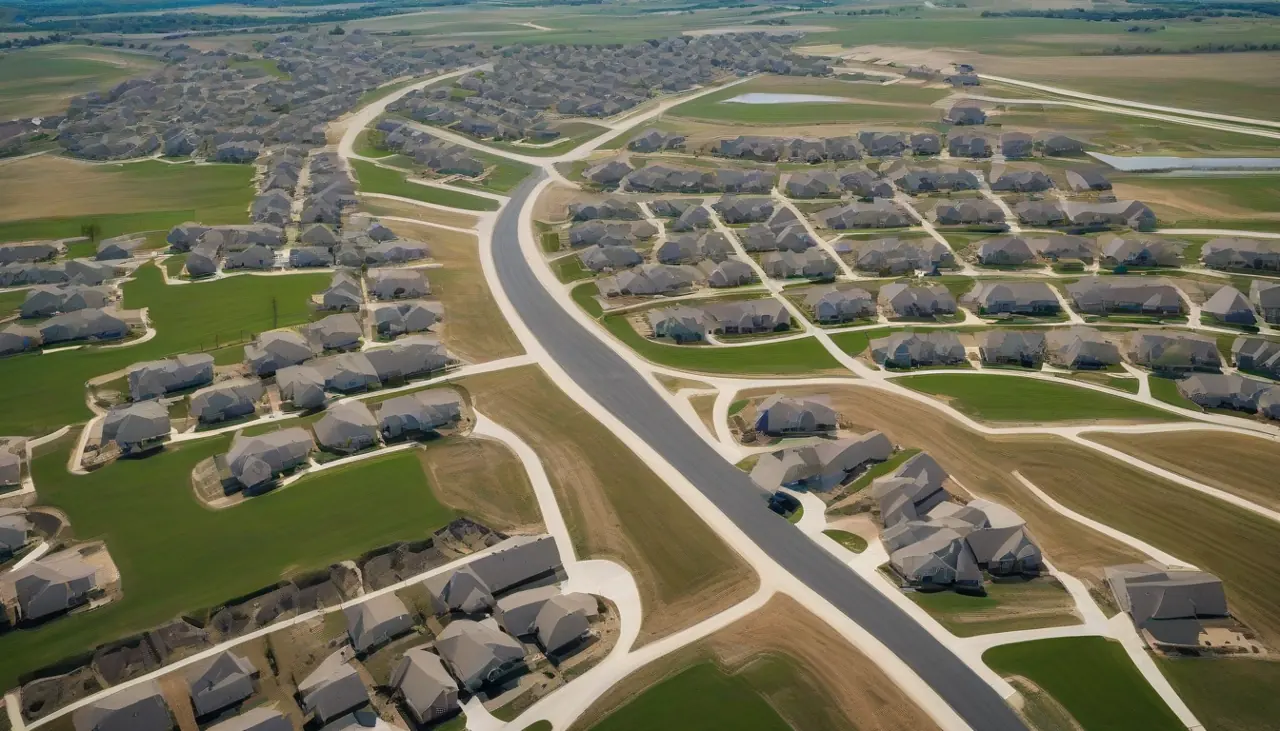
See our city guides for Dallas, Fort Worth, Denton and the surrounding counties.
Central Texas: Waco, Temple, Killeen and Belton
The stretch between the two big triangles is quieter and cheaper, but it is not static. Waco sits roughly halfway between Dallas-Fort Worth and Austin, Temple hosts a major medical center, and Killeen is tied to Fort Hood. Land here is mostly blackland prairie farmland and post oak woods, often held by families for generations, and many tracts have several heirs. For sellers that makes a direct, clean closing valuable. For buyers it means land that is cheaper per acre than Austin or DFW but has similar highway access.
The Texas A&M Real Estate Research Center groups this area into its Austin-Waco-Hill Country region, where rural land averaged about $8,040 per acre in the second quarter of 2026, up roughly 8.6 percent from a year earlier. That figure covers large rural tracts only and averages many very different properties, so treat it as context rather than an appraisal. TRERC
Ready to talk about your I-35 corridor land?
Pick whichever is easiest. No cost, no obligation, no pressure.
Prefer to talk now? Call (512) 588-2771
Austin and the SH 130 side
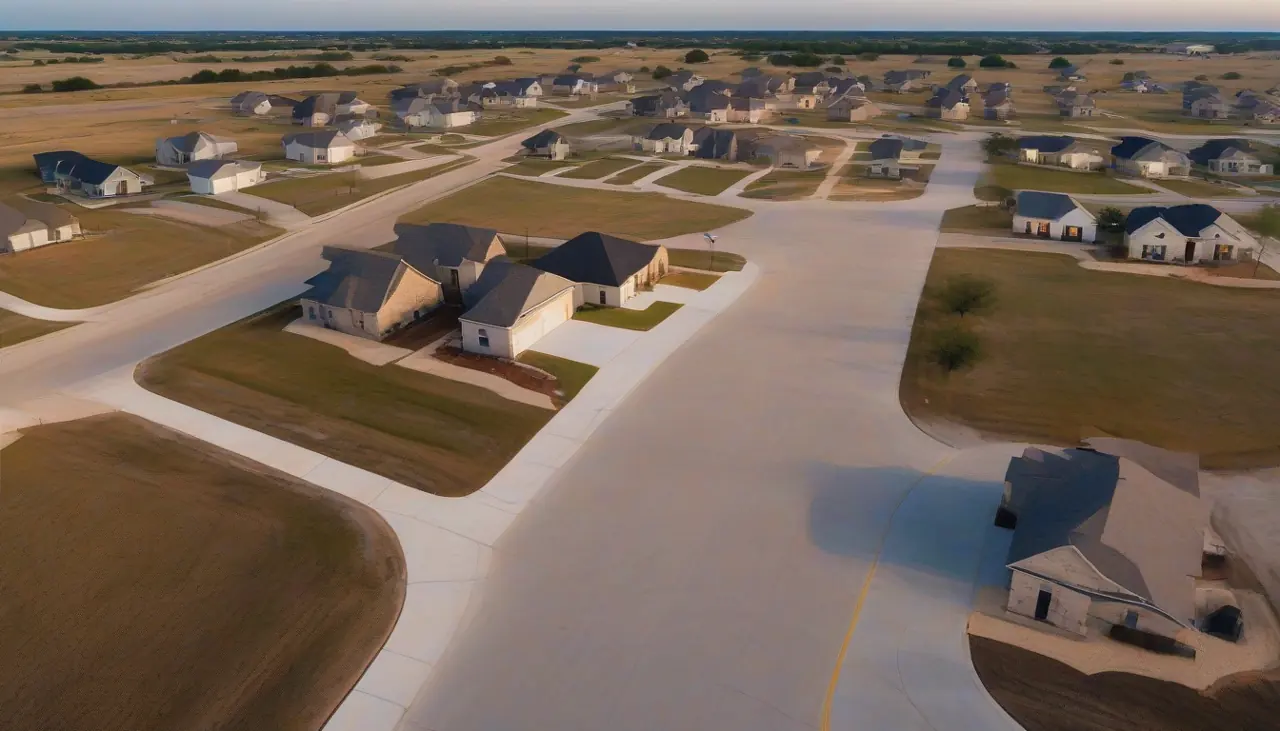
Austin passed one million residents, and the land around it is among the most closely watched in Texas. TxDOT's I-35 Capital Express Central project is rebuilding the interstate through downtown through roughly 2033, which will change access along the corridor for years. East of the interstate, SH 130 has become a logistics and industrial spine: the Lockhart Industrial Park, Lone Star Logistics Park and other projects are under construction, and Caldwell County leads the state in percentage growth among the counties near Austin. TxDOT
Samsung's large semiconductor campus in Taylor has pulled investor attention to Williamson County, and data-center developers are hunting for land with a credible path to power, which can multiply the value of the right tract. Propmodo
Read our guides to Austin and the Austin-area towns we buy in, from Georgetown and Round Rock to Kyle, Buda and San Marcos.
Austin to San Antonio: the fastest-growing stretch
Hays and Comal counties rank among the fastest-growing counties in the nation, and the 5.3-million-person Austin to San Antonio corridor is the region many economists expect to merge into a single megaregion. Comal County's population rose almost 28 percent between 2020 and 2025, and Guadalupe County about 16 percent. Kyle, Buda, San Marcos, New Braunfels and Seguin are running out of easy building land, which pushes builders toward older ranchettes, farm tracts and creek parcels. Community Impact
Because this stretch is so competitive, landowners often receive repeated unsolicited calls and mailers, with wide variation in what buyers actually pay. If you have heard from several buyers, a free written offer from us gives you a clear baseline.
San Antonio to Laredo: the trade end of I-35
South of San Antonio, I-35 runs through brush country toward Laredo. The Port of Laredo handled an estimated $339 billion in trade in 2024, and the city's industrial inventory is expected to reach roughly 61 million square feet by the end of 2026. Land at the I-35 and I-69 junction and north Laredo industrial parks attracts specialized logistics buyers, while the ranches in between are valued for hunting, minerals and long-term holding. The Eagle Ford Shale area still sees oil and gas activity, and mineral rights are often separated from the surface, which is why we always check the chain of title. TAMIU
What this means if you own land near I-35
You may be sitting on more value than you think
But value depends on frontage, utilities, floodplain and title. A free written offer, plus a conversation about timing, is the fastest way to learn where you stand.
Heirs and family tracts are the norm
Corridor land is often held by several family members. We coordinate signatures and the title company divides proceeds.
Taxes and rollback matter
If your land has an agricultural valuation, a change of use can trigger rollback tax for up to three prior years plus interest. We explain it before you sign.
Timing is yours to choose
You can close in a week or schedule a closing months out, for example after a harvest, a lease end or a probate hearing.
Should you wait for growth to reach your land?
Everyone along the corridor asks this question. The honest answer is that no one knows, and anyone who claims certainty is selling something. A few facts help you decide.
- Growth is real, but it moves unevenly. Some parcels have jumped, and others have waited many years.
- Property taxes keep running, even if your land has an agricultural valuation.
- Utility lines are the usual trigger. Land that a water or sewer line is about to reach is worth far more than land that is miles away.
- Large public projects such as interchanges and highway rebuilds can raise or lower value depending on where the access points land.
- A sure price today and a hoped-for higher price tomorrow are different products. Only the owner can decide which suits their life.
We would rather you sell at the right time than the first time. If you are unsure, send us your parcel and we will tell you plainly what we think and why, including when we think waiting is smart.
Cities along I-35 we have written guides for
Austin · Round Rock · Georgetown · Kyle · Buda · San Marcos · Belton · Temple · Salado · Killeen · Waco · Denton · Laredo. Browse all 254 Texas counties or see how the corridor fits into the Texas Triangle.
Frequently asked questions: selling land along I-35
Do you buy land all along the I-35 corridor in Texas?
Yes. We buy land from the Oklahoma line to Laredo along I-35, including the Dallas-Fort Worth area, Waco, Temple, Killeen, Georgetown, Round Rock, Austin, Kyle, Buda, San Marcos, New Braunfels, San Antonio and the counties around them, plus the SH 130 and I-10 corridors that connect to it.
Why is land along I-35 in such demand?
About half of Texans live in the corridor study area TxDOT defines around I-35, and the interstate connects the four biggest metros. Housing, warehouses, data centers, semiconductor plants and the roads that serve them all need land, so tracts near the interstate and its parallel routes draw builders, developers and investors.
Is my land worth more because it is near I-35?
Often, but not automatically. Value depends on access (frontage and driveway permits), utilities, floodplain, zoning or ETJ status and how close the tract is to the next phase of growth. We price each tract on its own facts and explain the number.
Will construction on I-35 hurt or help my land's value?
Both can happen. Widening and rebuilding can improve access and long-term demand, but it can also change driveway access, drainage and noise for years. TxDOT's I-35 Capital Express Central project in Austin runs through roughly 2033, for example. We check the plans for your location.
How fast can I sell land near I-35 for cash?
A straightforward sale can close in 7 to 30 days. You choose the closing date, and a Texas title company handles the paperwork.
What if my land has no access to I-35 or is far off the interstate?
We still buy it. Land on farm roads and county roads in the corridor counties is common, and we price access, utilities and floodplain the same way.
Do you buy land in the SH 130 and I-10 corridors too?
Yes. SH 130 (Georgetown to Seguin) and I-10 (San Antonio to Houston) are major growth routes connected to I-35, and we buy there.
Is a cash offer lower than listing with an agent?
Usually, because you are trading some price for speed, certainty and no commission or repairs. Land in the interstate corridor can attract strong retail interest, so if your tract is clean, accessible and you can wait, it can be worth testing the market. We will tell you honestly if we think a listing would net you more.
Can I sell inherited land in the I-35 corridor?
Yes, once the person signing has legal authority. We work with executors, heirs and probate attorneys and can sign a contract that closes when the court paperwork is ready.
How do I get started?
Request a free quote, book a call or schedule a visit using the buttons on this page. There is no cost or obligation.
How many counties does I-35 cross in Texas?
I-35 passes through roughly 20 Texas counties, from Webb County at Laredo to Cooke County at the Oklahoma line, with I-35E and I-35W adding Dallas, Tarrant, Ellis, Denton and others. The exact count depends on how you treat the split.
Is land near I-35 always more valuable?
No. Highway frontage with utilities and legal access is valuable. Land that is near the road but lacks utilities, has no recorded access or sits in a floodplain can be worth much less than similar land elsewhere.
What is the fastest-growing part of the I-35 corridor?
Growth has been strongest in Williamson, Hays, Comal and Guadalupe counties between Austin and San Antonio, and in Collin, Denton and Ellis counties north of Dallas. Check current Census Bureau estimates for the latest county figures.
Will the I-35 rebuild in Austin affect land values?
Large highway projects can shift access and traffic patterns and affect nearby land. TxDOT has published segment schedules into the 2030s. Check the current plan, because timelines have changed.
Figures are from the cited sources (Census, TxDOT, Texas A&M Real Estate Research Center and press reports) and change. We are a direct buyer, not a law firm or tax advisor. This is general information, not legal or tax advice.