
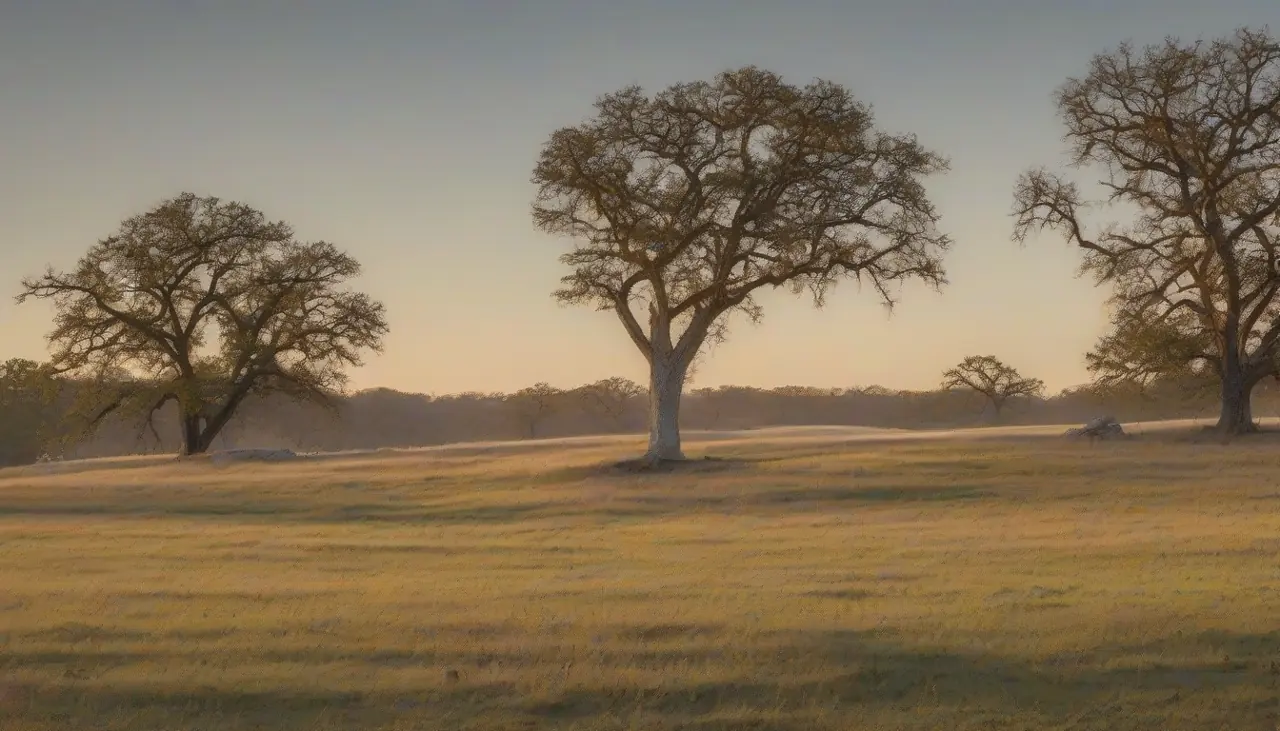
Fort Worth crossed one million residents in the 2025 Census estimates and is one of the fastest-growing large cities in the country. It sits at the intersection of two landscapes: the Blackland Prairie farmland to the east and the Cross Timbers, a belt of post oak and blackjack oak woods and rolling pasture, to the west and southwest. Its identity is cattle and rail, and its modern growth has been driven by logistics, aviation, manufacturing and the suburban expansion of the whole metroplex.
This guide explains how land sells in and around Fort Worth, which rules matter, what is driving demand, and how a direct cash sale compares with listing. You can get a free quote, book a call or schedule a visit at any point on this page.
Fort Worth land at a glance
Why Fort Worth landowners choose a direct cash sale
Minerals complicate titles
The Barnett Shale boom left many Tarrant, Parker, Johnson and Wise County tracts with severed or leased minerals. We review the chain of title and price what you are actually selling.
Growth edges move quickly
Tracts along the I-35W corridor, near AllianceTexas and in Parker and Johnson counties see strong builder and industrial interest. A direct sale lets you act on an offer without waiting for the next one.
Large family tracts are common
Ranches and farms around Fort Worth are often held by several heirs. A single clean offer and coordinated closing helps everyone decide.
How land sells in Fort Worth
Land around Fort Worth sells in distinct segments. North of the city, the AllianceTexas corridor and the I-35W route toward Denton are dominated by logistics, industrial and housing developers. East toward Arlington and Mansfield, land is mostly built out, so remaining parcels are infill or odd-shaped. West and southwest toward Weatherford, Aledo and Benbrook, ranches and lifestyle acreage attract individuals and builders. South along I-35W toward Burleson and Cleburne in Johnson County, farmland and ranches are being converted to subdivisions.
Buyers are different in each segment. Industrial users want access to highways, rail and power, often at large scale. Housing developers want utilities and platting potential. Lifestyle buyers want views, privacy and water, and often need financing. Ranchers and hunters value grass, water and size. Investors hold land for growth.

Because Fort Worth land often carries history, such as old oil and gas leases, family ownership and informal boundaries, retail buyers who rely on financing can find it difficult. A direct buyer can often move faster when a parcel has a complicated backstory.
The decision between listing and selling directly is about net proceeds and certainty. A listing may bring a higher number for a clean tract, but you wait, pay commission and carry costs. A direct sale gives you a firm number and date.
Land types in Fort Worth and what drives their value
| Land type | What drives value | Who typically buys | Watch for |
|---|---|---|---|
| Alliance and I-35W corridor tracts | Highway and rail access, utilities, power, size | Industrial and housing developers | Easements, drainage, platting |
| Cross Timbers ranch land | Grass, water, views, access, size | Ranchers, lifestyle buyers | Severed minerals, leases, wells |
| Infill and older lots | Zoning, utilities, neighborhood sales | Builders, investors | Liens, unclear heirs, back taxes |
| Lake and creek-adjacent land | Water access, floodplain, scenery | Recreational buyers | Floodplain, water district rules |
| Inherited or unprobated tracts | Clear title, agreement among heirs | Direct buyers, investors | Probate, multiple owners, minerals |
Ready to talk about your Fort Worth land?
Pick whichever is easiest. No cost, no obligation, no pressure.
Prefer to talk now? Call (512) 588-2771
Land areas around Fort Worth
North Fort Worth and AllianceTexas
The Alliance area, anchored by a major airport and rail facilities, is one of the largest logistics hubs in the country. Surrounding land is in demand for industrial and housing use, and prices reflect that.
West and southwest: Parker and Hood counties
Cross Timbers terrain with post oak, limestone and ranch land toward Weatherford and Granbury. Lifestyle buyers and builders compete for tracts with views and water.
South: Johnson County and the I-35W corridor
Farmland and ranches around Burleson, Joshua and Cleburne are being converted to subdivisions as Fort Worth grows south. Tracts near the highway and utilities draw the most interest.
East: Tarrant County infill
Mostly built out, with remaining parcels that are small, irregular or have unresolved ownership questions. Infill builders buy these when title is clean.
Northwest: Wise and Denton counties
Barnett Shale country with ranchland, pipelines and growing subdivisions along US 287 and US 380. Minerals are central to value.
Rules and records every Fort Worth seller should know

Fort Worth has zoning and development standards inside its city limits and a large extraterritorial jurisdiction, so a rural-looking tract may still be subject to city platting. Outside the ETJ, county rules govern road and subdivision standards. Before splitting any tract, check which rules apply.
Records are held by the Tarrant Appraisal District (valuation and ownership) and the Tarrant County Clerk (deeds, easements, liens). Parker, Johnson, Wise and Denton counties have their own appraisal districts and clerks. Floodplain along the Trinity River and its tributaries, and around lakes such as Benbrook and Eagle Mountain, limits usable land on many tracts.
The Barnett Shale activity of the 2000s and 2010s left a patchwork of mineral ownership and surface-use agreements. Pipeline and well-pad easements affect where a buyer can build. If your land has agricultural or wildlife valuation, a change of use after a sale can trigger rollback tax for up to three prior years plus interest. We check each of these before we make an offer.
Water, septic and utilities near Fort Worth
Inside the city, water and wastewater come from the city. In surrounding areas, service may come from water supply corporations and districts, and regional water supply is managed by agencies such as the Tarrant Regional Water District. Rural tracts commonly rely on wells and septic.
Cross Timbers soils vary from thin rocky ground to sandy loam. Septic design depends on depth and drainage, and a soil evaluation is often the key to whether a tract is buildable.
What is driving land demand around Fort Worth
North Texas is on track for roughly nine million residents and the regional planning agency projects about 12.4 million by 2050. Tarrant County added more than 30,000 residents in a recent year, and the DFW region has been a national leader in industrial demand and in data-center development, with developers pre-leasing about 95 percent of the large capacity under construction in the first half of 2026.
Fort Worth also benefits from major employers in aviation, defense, logistics and manufacturing. The Chisholm Trail Parkway corridor to the south and the I-35W corridor to the north are major growth routes, and TxDOT continues to widen and rebuild highways across the area. Nominations for the new Opportunity Zone 2.0 program included 20 tracts in Tarrant County, though the federal list is still pending.
None of these trends guarantees a particular price. Land value depends on access, utilities, minerals, floodplain and title, and we look at each tract individually.
See the bigger picture in our guides to the I-35 corridor and the Texas Triangle.
Common reasons Fort Worth owners sell land
A family ranch near Weatherford
Heirs want to sell and need minerals reviewed. We buy surface only or both and explain what transfers.
A tract on the I-35W corridor
An owner is approached by several builders and wants one clear baseline.
An old infill lot with liens
Back taxes and a mowing lien have accumulated. We buy as-is and pay them from proceeds.
Land with a pipeline easement
The easement scares off some retail buyers. We read it and price the usable area.
What affects the value of Fort Worth land
Interchange and frontage
Parcels near major interchanges draw commercial and industrial buyers.
Utilities
Water, sewer, gas and electric at the line save a buyer money.
Minerals
Where minerals are included, value rises. Where they are severed, buyers adjust their price.
Pipeline and utility easements
These limit building areas and appear on title commitments.
Floodplain
Creek bottoms and the Trinity River floodplain restrict building.
Shape and topography
Rectangular, level tracts are easier to develop than narrow or steep ones.
How do you sell inherited or estate land in Tarrant County?
Tarrant County probate matters go through its probate courts. The usual order looks like this.
Locate the will. A will generally must be probated within four years of death in Texas.
Establish legal authority. An executor needs letters testamentary. Without a will, a court may appoint an administrator or determine heirship.
Gather documents. Deed, tax statement, survey, mineral leases and the death certificate.
Align the heirs. All owners must consent, or a court must authorize the sale.
Close through a title company. Taxes and liens are paid at closing from the proceeds.
Mineral rights bring a special wrinkle. Many Tarrant County families have gas leases and royalties from the Barnett Shale, and a sale can include or exclude them. Make a deliberate choice. You can sell the surface and keep the minerals, or sell both. A Texas attorney can explain how royalties pass to heirs and how a deed should be worded. We can buy either way, and we price each option.
Do you have gas leases or royalty checks? Send us a copy of any lease or recent royalty statement. It helps us price the land and avoids surprises at closing.
How does Fort Worth compare with nearby markets?
Fort Worth sits between Dallas and the ranch country to the west and south. Dallas is more built out and driven by zoning and infill. To the north, Denton and Frisco share the I-35 and Dallas North Tollway growth story. To the south, Cleburne offers ranch and pasture land with Barnett Shale minerals, and Waxahachie mixes industrial and blackland farm tracts.
A parcel in Tarrant County can sell very differently from one in Johnson County, even a few miles away. We look at your parcel against its immediate neighbors, not the county average.
Who should you call locally before you sell Fort Worth land?
Tarrant County land often involves minerals and pipelines, so the list of offices is a little longer than for a plain city lot.
- Tarrant Appraisal District. Pull the account to see ownership, acreage, exemptions and any agricultural valuation. Compare the legal description with your deed.
- Tarrant County Clerk. Search deed records, recorded oil and gas leases, pipeline easements and surface use agreements here. These recorded documents tell a buyer what rights other parties hold.
- Tarrant County Tax Office. Request a payoff statement if taxes are behind.
- Texas Railroad Commission. It publishes public data on wells, permits and pipelines. If gas wells or pipelines cross your land, the commission’s maps help you describe them accurately to a buyer.
- Tarrant Regional Water District. It manages the Trinity River floodway and several lakes. Land near the river, Lake Worth or Eagle Mountain Lake may fall under its rules or easements.
- City of Fort Worth Planning and Development. Ask whether the land lies inside the city, in the extraterritorial jurisdiction or in the county, and what platting rules apply.
- Tarrant County floodplain administrator. For land in the unincorporated county, this office answers drainage and building questions.
If the land sits near Alliance, ask the neighboring city or the Alliance development group about planned roads and utilities, because those plans can change value quickly.
How does the year run for Fort Worth landowners?
North Texas land follows weather, cattle and construction seasons.
January to March. Taxes are due January 31. Cold snaps can freeze water lines, so a vacant lot with an old meter may need attention. Spring pasture starts to green in March, and ranch buyers begin looking.
April to June. Appraisal notices arrive, with a protest deadline of May 15 or thirty days after the notice. Spring storms and hail are common, and fence lines and roofs on old outbuildings sometimes need repair. Take photographs before and after to document the land’s condition.
July to September. Summer heat dries pasture, and tank levels fall. Buyers who tour in August see the land at its toughest, which can be useful for judging water and drainage. Fort Worth Stock Show activity is in January and February, so ranch buyers and sellers cross paths early in the year.
October to December. Hunting season brings recreation buyers to Parker, Wise and Johnson counties, and lease renewals often end at the new year. Tax statements arrive, and year-end closings are common.
Energy cycles. Gas prices influence leasing, drilling plans and royalty income. When prices rise, mineral owners often receive more lease offers, and surface buyers pay closer attention to what is recorded. When prices fall, activity slows. A seller with royalty income should discuss timing with a tax advisor before closing.
How selling land to us works
Tell us about it
Share the location and a few details by form or phone. About a minute, no cost.
We research and make an offer
We check records, access, flood and utilities, then give you a written cash offer within 24 hours and explain the number.
You choose the date and get paid
A Texas title company handles the paperwork. You are paid at closing, usually 7 to 30 days out or on the date you choose.
Benefits of working with Sell My Texas Estate in Fort Worth
No commissions or fees
You keep the full offer. We typically cover standard closing costs.
Buy as-is
No repairs, clearing, surveys or cleanup required to get an offer.
You pick the date
Close in 7 to 30 days, or on the date you choose.
We handle hard land
Back taxes, liens, no road access, heirs, minerals, floodplain.
Cash or flexible terms
Cash when it works, owner-financed or creative terms when the deal needs them.
Straight answers
If a listing would net you more, we will say so.
Local to Texas
We understand Tarrant County records, the Barnett Shale mineral history and how AllianceTexas and the highway corridors change what land is worth.
Cash offer vs listing your Fort Worth land
| Sell to us | List with an agent | Auction | |
|---|---|---|---|
| Commission and fees | None | Commonly 5 to 6%+ | Buyer's premium and fees |
| Time to close | 7 to 30 days, or your date | Often months on land | Weeks, on their schedule |
| Price certainty | Written offer up front | Depends on market | Unknown until bidding |
| How you get paid | Cash at closing, or owner-financed terms | Whatever the buyer can finance | Cash at the auction |
| Financing risk | None, cash | Buyer loan can fail | Usually cash |
| Repairs and cleanup | None | Often expected | As-is |
Details in our guides to selling land for cash, selling land fast and selling without a realtor.
Cash is simple. Some land needs more than that.
We buy for cash when that works. When a deal needs it, we get creative: owner-financed purchases, notes, partnerships and development.
Cash offer
A written offer within 24 hours. Closing typically takes 7 to 30 days, or on the date you choose. No commissions or fees.
Owner financing and notes
Want a down payment and payments over time? We can buy your land on owner-financed terms, and we can talk about buying an owner-financed note you hold.
Partnerships and entitlement
Land with development potential? We partner with landowners, buy entitled land and take properties through entitlement.
There is no one-size-fits-all land deal. Each one can have its own lenders, financials and offers, so contact us for details.
Tell us how you want to be paid How owner financing works → Investor? Register for deals →
Fort Worth land selling: frequently asked questions
Can I sell land in Fort Worth without a realtor?
Yes. You can sell directly to a cash buyer. We make a written offer, a Texas title company handles the closing, and you pay no commission.
How fast can I sell?
A clean sale can close in 7 to 30 days. You choose the date.
Do you buy land in Parker, Johnson, Wise and Hood counties?
Yes. We buy across Tarrant County and the surrounding counties.
How do Barnett Shale minerals affect my sale?
Minerals may be severed or leased. We check the chain of title and either buy surface only so you keep minerals, or buy both, as the contract states.
What if there is a pipeline or well-pad easement?
We read the easement. It reduces usable area and sometimes controls use, and we price the land accordingly.
Can you buy land that is in a floodplain?
Yes. We review FEMA maps and the survey and price the area that can be built or used.
Can you buy inherited land before probate is finished?
We can sign a contract contingent on the signer's authority and close when the court paperwork is ready. Talk to a probate attorney about your specific situation.
Will I owe rollback tax?
If your land has an agricultural valuation and use changes after the sale, taxing units can bill up to three prior years plus interest. We explain who pays before you sign.
What about back taxes and liens?
They are paid from your proceeds at closing and you receive the balance.
How is your offer calculated?
From comparable sales adjusted for access, utilities, minerals, floodplain, taxes and our cost of carrying and reselling. We explain it in writing.
Is a cash offer lower than listing?
Usually, because you get speed and certainty and avoid commission and repairs. We will tell you if listing would net more.
How do I get started?
Get a free quote, book a call or schedule a visit using the buttons on this page.
Can I keep my mineral rights when I sell?
Yes, if the deed reserves them. You can sell the surface and keep the minerals, or sell both. We can buy either way.
Do you buy land with gas wells or pipelines?
Yes. We review leases, easements and surface agreements and price them honestly.
How fast can you close?
Typically 7 to 30 days with clean title and ready owners. Estates and title questions may take longer. You pick the date.
Do you buy small lots in older Fort Worth neighborhoods?
Yes. We buy infill lots, including inherited ones with code issues or liens.
Nearby cities and counties we buy in
Dallas, Arlington, Denton, Grand Prairie, Tarrant County, Parker County, Johnson County, Wise County. Also see Tarrant County and all 254 Texas counties.
We are a direct property buyer, not a law firm, tax advisor or real estate brokerage. This guide is general information, not legal or tax advice. Population figures: U.S. Census Bureau Vintage 2025 estimates. Market figures are indicative and change.