
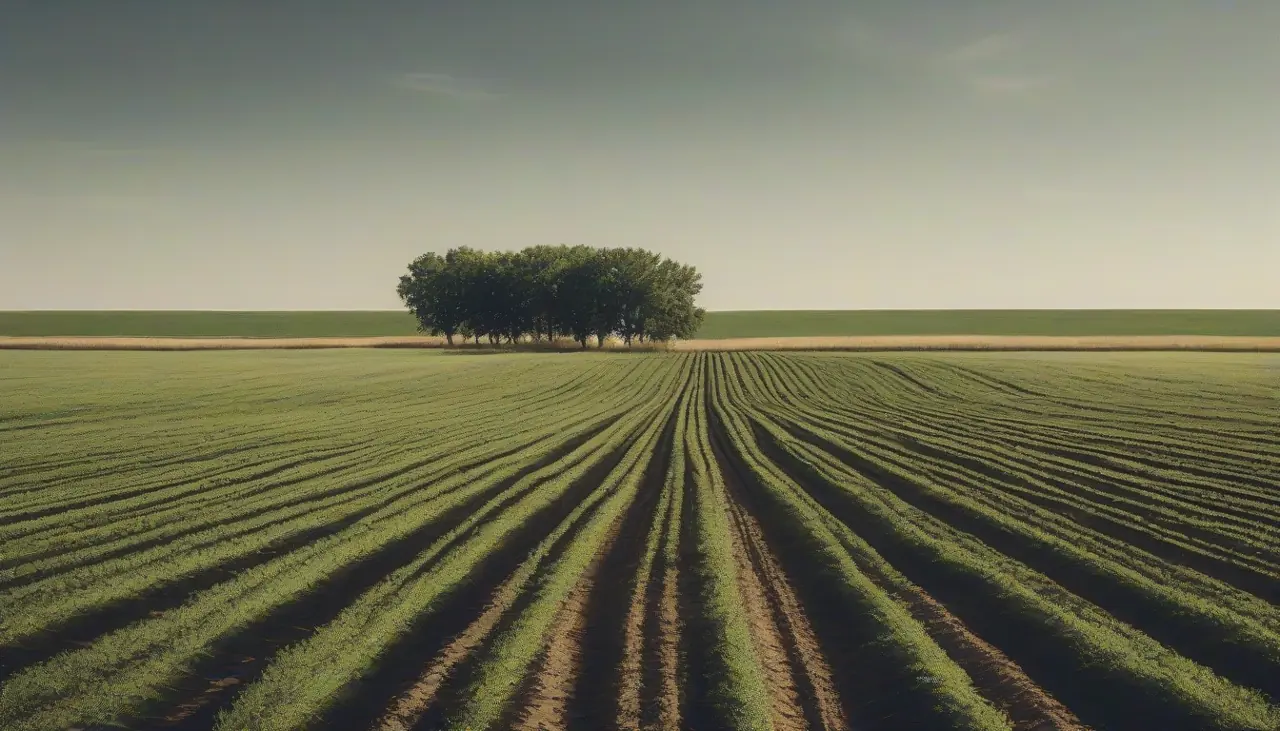
The Texas Triangle is one of eleven megaregions in the United States. Texas 2036 counts about 35 counties holding roughly 68 percent of the state's population and producing about $2.2 trillion, close to 80 percent of Texas's economic output. Other sources measure it by metro area and report more than 22 million residents. In the most recent Census year the Houston metro added about 127,000 people (the most of any U.S. metro), Dallas added about 124,000, and Austin and San Antonio together added about 92,000. Texas 2036 · TxDOT
That growth has to go somewhere. It goes onto farms, ranches and old family tracts at the edges of every city and along the highways that connect them. This guide explains where, why, and what it means if you own land inside the Triangle.
The four corners and what each means for land
| Corner | Growth edge | Land character | Key routes |
|---|---|---|---|
| Dallas-Fort Worth | Collin, Denton, Kaufman, Ellis, Rockwall, Hunt, Johnson, Hill; Celina, Princeton, Anna, Melissa | Blackland Prairie farms, Cross Timbers post oak ranches | I-35E/I-35W, US 75, US 380, I-30, I-20 |
| Houston | Waller, Montgomery, Liberty, Fort Bend, Brazoria, Grimes | Gulf Coast prairie, pine and oak woods, flood-prone bottoms | US 290, I-45, SH 249, SH 99, I-10 |
| San Antonio | Comal, Guadalupe, Bexar, Medina, Wilson, Bandera | Hill Country edge, South Texas brush, Edwards Aquifer land | I-35, I-10, US 281, US 90 |
| Austin | Hays, Caldwell, Williamson, Bastrop, Burnet | Hill Country limestone to the west, Blackland farms to the east | I-35, SH 130, US 290, SH 71 |
Where growth is heading: the numbers
The 2025 Census county estimates show Texas gained 391,243 residents (1.2 percent) to reach 31.7 million, with 146 counties growing and 108 shrinking. The fastest percentage growth was in outer suburban counties: Waller County northwest of Houston (about 5.7 percent), Kaufman County east of Dallas (about 5.7 to 6 percent), and Liberty, Montgomery and Caldwell counties all above 4 percent in various reports. In raw numbers, Harris County added about 48,700 people and Collin about 43,000, while Williamson County reached 752,827. Dallas County and many border counties lost population. Census-based summary
The lesson for landowners is that growth is concentrated, not uniform. A parcel on a growth route in an outer county can see strong buyer interest, while a parcel in a shrinking rural county may not. We look at your specific location rather than assuming the whole state is booming.
What is creating demand for land
Housing spillover
Builders are moving out along US 290, US 75, I-35 and I-10 as close-in land runs out. A 700-home community on about 273 acres near Waller is one example of the pattern.
Data centers and power
Texas has dozens of operating data centers and a large pipeline. Land with a credible path to power can trade at a premium; Hill County saw an offer near $100,000 per acre, far above appraisal.
Semiconductors and industry
Samsung's large Taylor campus and other projects pull suppliers, housing and logistics demand to nearby counties.
Freight and trade
SH 130 logistics parks, the I-35 and I-69 junction in Laredo and ports along the Gulf Coast need warehouse and industrial land.
New roads
I-35 Capital Express in Austin, I-35E widening in North Texas and I-10 projects near San Antonio change access and long-term demand.
Water funding
Voters approved the Texas Water Fund in 2025, with up to $1 billion a year starting in 2027, making water access a growing land-value factor.
Sources: Propmodo, Hoodline, Korea JoongAng Daily, CBS Texas.
Ready to talk about your Triangle land?
Pick whichever is easiest. No cost, no obligation, no pressure.
Prefer to talk now? Call (512) 588-2771
Opportunity Zones 2.0: should landowners care?
Governor Abbott finalized 605 nominated Opportunity Zone tracts on September 4, 2026, for the new program that runs January 1, 2027 through 2036 once federally certified. The rules are tighter than the original program: tracts generally need median family income below 70 percent of the state or metro median, or a high poverty rate with income below 125 percent. Most original zones were not renominated. The nominations are concentrated in big metros, with Dallas County nominating 60 tracts, Tarrant 20 and Bexar 34. Jackson Walker
For rural land, the new law offers a larger tax benefit (a 30 percent basis step-up after five years for qualified rural funds) and a lower improvement threshold. That can make a tract in a qualifying rural zone more interesting to specific investors. It does not guarantee a higher price, and the final tract list must be confirmed. If your land might be in a zone, tell us and we will check the official list when it is certified. This is general information, not tax advice; talk to a tax professional. RSM
What sellers inside the Triangle should know
Unsolicited offers are common
If builders and investors keep calling, a written cash offer from us gives you one clear number to compare.
Timing and taxes
Agricultural valuations can trigger rollback tax on a change of use. Property taxes and insurance keep running while you wait for the right buyer.
Heirs are the norm
Many Triangle tracts are family-held with multiple owners. We coordinate signatures and the title company splits proceeds.
Minerals, access and floodplain
These can shift value significantly. We review them and tell you exactly how they affected our offer.
What kinds of land sit inside the triangle?
Metro edge land. Farmland, pasture and woods at the edge of a metro, near utilities and highways, are in demand from builders and developers. Values can be many times the rural average.
Corridor land. Parcels beside a major highway draw industrial, logistics and retail buyers. Frontage, interchange access and rail increase value.
Interior rural land. Ranches, timber and small farms between the big metros sell for rural prices, with buyers who want recreation, privacy or long-term holding.
Small-town infill. Lots in towns such as Huntsville, Bryan and Seguin sell to builders and investors on a smaller scale.
Land with special features. Floodplain, aquifer recharge zones, minerals, pipelines and lakes each change the buyer pool.
What should triangle landowners do before they sell?
- Find out who serves your land. Which water, sewer and electric providers cover it, and how far are the lines?
- Check the map. Flood zones, aquifer zones and wetlands each change what a buyer will pay.
- Know the jurisdiction. City, ETJ or county, and whether annexation is likely.
- Read your title. Easements, severed minerals, old liens and unrecorded transfers need attention.
- Compare routes. A land broker, a developer and a direct buyer each have a place. Ask each how they priced your land.
Explore by corridor and city
I-35 corridor · Austin · San Antonio · Houston · Dallas · Fort Worth · Waco · all 254 counties and 150 cities.
Frequently asked questions: selling land in the Texas Triangle
What is the Texas Triangle?
It is the megaregion anchored by Dallas-Fort Worth in the north, Houston in the southeast and Austin-San Antonio in the southwest, with Waco, Temple, Bryan-College Station and other cities in between. Depending on how it is drawn, it holds roughly 68 to 70 percent of Texans and an estimated 80 percent of the state's economic output.
Do you buy land everywhere inside the Texas Triangle?
Yes. We buy land in and around Dallas-Fort Worth, Houston, San Antonio and Austin and across the counties between them, including along I-35, I-45, I-10, US 290 and SH 130.
Is land between the big cities more valuable than land in the cities?
Not per acre, but it is where most growth is heading. The fastest percentage growth in the 2025 Census estimates was in outer counties such as Waller, Kaufman, Liberty and Caldwell, because that is where new housing, warehouses and utilities are going.
What drives land value inside the Triangle?
Access to highways, utilities and power, floodplain, soil and terrain, proximity to employers (including semiconductor plants and data centers) and local rules such as ETJ and platting requirements.
Are Opportunity Zones relevant to my land?
Possibly, to investors. Texas nominated 605 tracts for the new Opportunity Zone 2.0 program, which starts January 1, 2027 once federally certified. If your land falls in one, it may interest certain investors, but it does not guarantee a higher price. See our guide for details.
Is it better to sell now or wait?
It depends on your tract and your situation. Waiting can pay off if growth is heading your way, but you carry taxes, insurance and risk while you wait. We give you an honest comparison and you decide.
Can you buy land with minerals, liens or no road access?
Yes. We buy as-is and handle liens and back taxes at closing. Access and minerals affect price, not whether we make an offer.
How do I start?
Request a free quote, book a call or schedule a visit. There is no cost or obligation.
Is land in the Texas Triangle more valuable than other Texas land?
Land near growth, utilities and highways in the triangle generally commands more than similar land in remote areas. Within the triangle, values vary widely by parcel.
Which triangle counties are growing fastest?
Recent Census Bureau estimates have put Kaufman, Liberty, Montgomery and Waller counties among the fastest-growing in percentage terms. Harris County has added the most people. Check the latest estimates for current numbers.
Does being inside the triangle mean my land will be developed?
Not necessarily. Many parcels sit far from utilities and highways. Timing depends on where lines and roads are going.
Should I wait to sell if my land is in the triangle?
It depends on your taxes, your timeline and how near utilities are. Waiting can pay, but it carries risk, and a certain price now is different from a hoped-for higher price later.
Figures come from the cited sources and change. We are a direct buyer, not a law firm or tax advisor. This is general information, not legal or tax advice.